



Jul 28, 2026
Technical Guide to Power Plant SCR Catalysts: Composition, Selection, Deactivation, and Regeneration
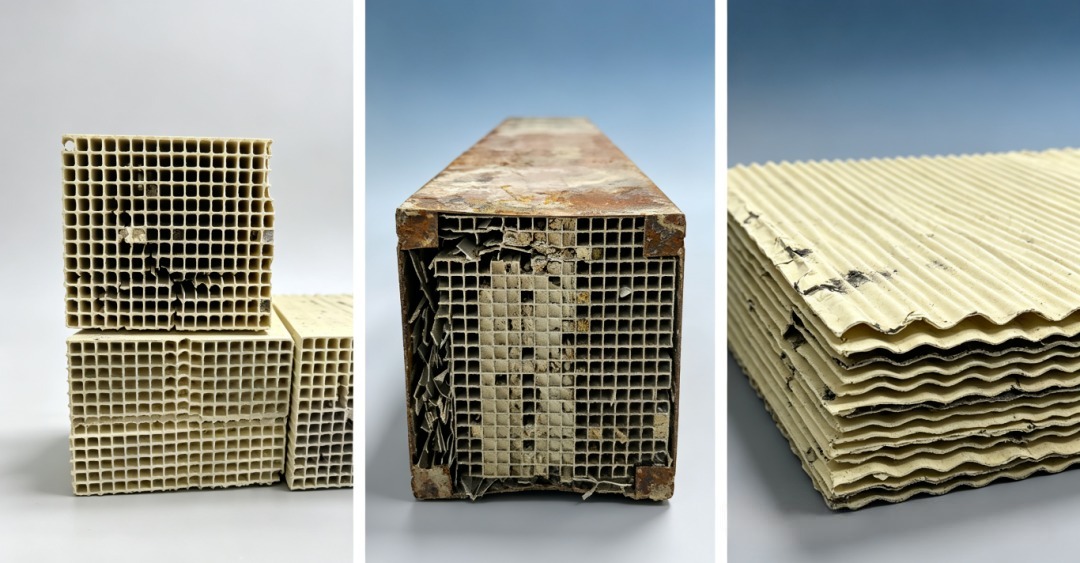
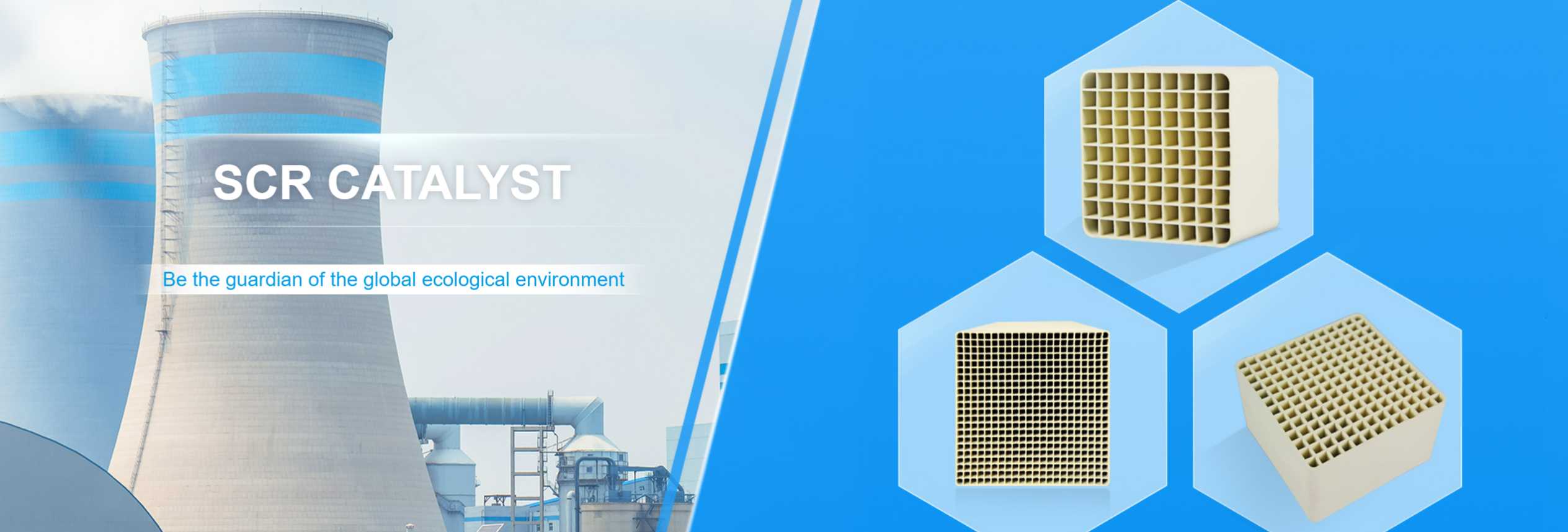
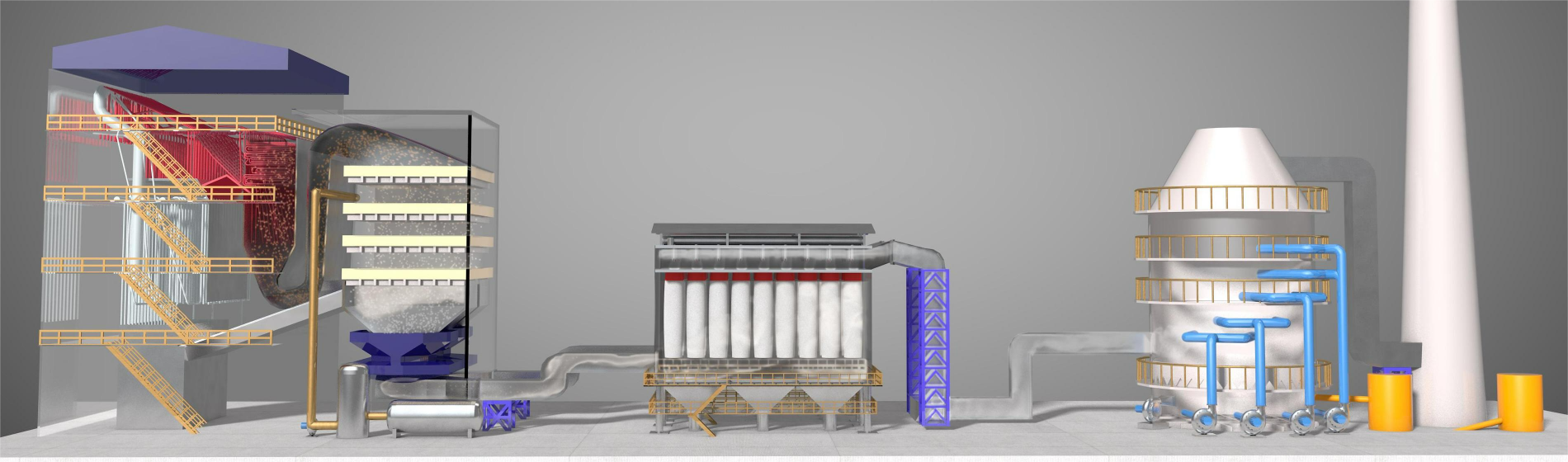
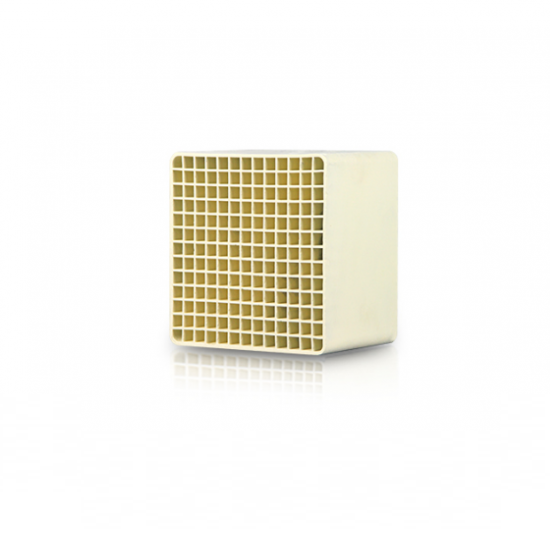
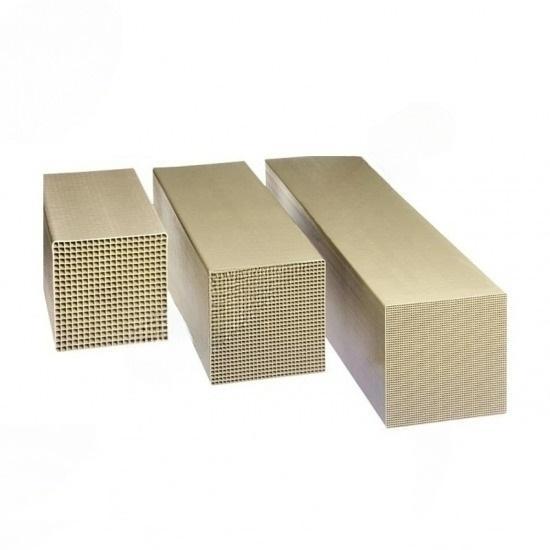
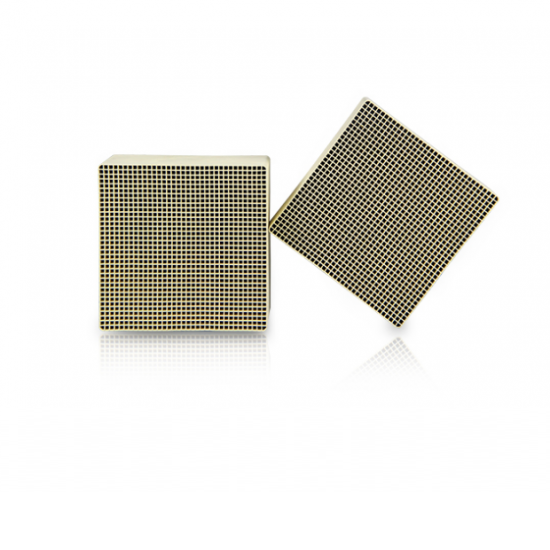
In coal-fired power plant flue gas denitrification, the Selective Catalytic Reduction (SCR) catalyst serves as the core engine. The stability of DeNOx efficiency, compliance with emission standards, operational costs, and overall system lifespan all depend heavily on catalyst performance. For plant operators, engineers, and procurement managers, issues like catalyst plugging, poisoning, mechanical wear, and premature deactivation are common headaches. This guide breaks down the essential technical aspects of SCR catalysts: chemical composition, selection standards, structural comparisons, deactivation mechanisms, and end-of-life management. 1. Chemical Composition of SCR Catalysts Commercial SCR catalysts for power plants are multi-component composite systems. The precise formulation determines the catalyst's operating temperature window, DeNOx activity, and resistance to chemical poisoning. Typical industrial formulations include: Titanium Dioxide (TiO₂): The primary carrier/substrate (typically in the anatase form). It provides the structural surface area to disperse active phases, suppresses SO₂ oxidation, and ensures stability under harsh, corrosive flue gas conditions. Vanadium Pentoxide (V₂O₅): The primary active phase. It drives the redox reaction that reduces NOx into N₂ and H₂O. Its concentration is tailored based on the specific flue gas temperature and concentration profile. Tungsten Trioxide (WO₃): A promoter that enhances thermal stability, prevents structural sintering at high temperatures, and strengthens the electronic interaction between the active phase and the carrier. Molybdenum Trioxide (MoO₃): An optional promoter used specifically to enhance arsenic resistance. It is critical for plants burning high-arsenic coal. Structural Additives (SiO₂, Al₂O₃): Added to improve mechanical strength, fracture toughness, and erosion resistance in high-dust environments. 2. 5 Engineering Metrics for Quality Evaluation To withstand the harsh environments of power plant flue gas (high dust, high temperature, and complex chemical trace elements), a high-grade SCR catalyst must satisfy five distinct technical requirements: High DeNOx Activity: Sustained, high-efficiency NOx removal rates across varying boiler loads, ensuring strict compliance with local emission limits. Optimal Reaction Selectivity: Ensures the reducing agent (NH₃) reacts precisely with NOx rather than being oxidized by oxygen. This maximizes chemical efficiency and minimizes downstream ammonia slip. Superior Mechanical Integrity: High crushing strength and erosion resistance to withstand continuous bombardment by high-velocity fly ash particles, preventing structural cracking during installation and operation. Robust Poisoning Resistance: The ability to resist chemical attack from trace elements within the fly ash, such as arsenic, alkali metals, and alkaline earth metals. Balanced Chemical Stability: Minimal SO₂ to SO₃ oxidation rates (typically below 1%), excellent thermal s...
더보기